The 2026 Milan-Cortina Winter Olympics. At Livigno, the venue for snowboarding, an unbelievable spectacle unfolded.
Japanese athletes dominated the podium. The Japanese team won a total of nine medals, including four gold.
This was more than just a “medal rush”; it was a historic event where Japanese snowboarding conquered the world.
Until then, Japan’s image was dominated by Ayumu Hirano’s halfpipe success, but 2026 changed everything.
It wasn’t just one charismatic star; young Japanese athletes rose to prominence one after another across every discipline, executing world-class tricks with cool composure.
Why did Japan achieve such flawless dominance? Behind it lay unique training environments built in cities without snowfall and a free-spirited culture born from the streets.
- The all-around strength proven in Milan-Cortina.
- Get stronger even without snow on the “Giant Air Mattress”
- Free Culture × Science × Data
- Dual expertise with skateboarding and world-class standards born from playgrounds
- The World Standard Made in Japan—What is the Key to Victory in the 2030 French Alps?
- You may also like to read
The all-around strength proven in Milan-Cortina.
At the 2026 Milan-Cortina Games, Japan achieved a historic feat in freestyle snowboarding, which is divided into three events, winning medals in all three events for both men and women.
There are three events in freestyle snowboarding.
- Halfpipe
Competitors perform consecutive high jumps on a half-cylindrical course, competing on the difficulty, height, and aesthetic appeal of their tricks. - Big Air
Athletes launch from massive jumps and execute high-difficulty tricks in a single aerial maneuver. - Slopestyle
Riders navigate a course featuring a series of jumps, rails, and other obstacles, competing on overall technical skill and creativity.
Halfpipe achieves long-awaited gold and generational shift
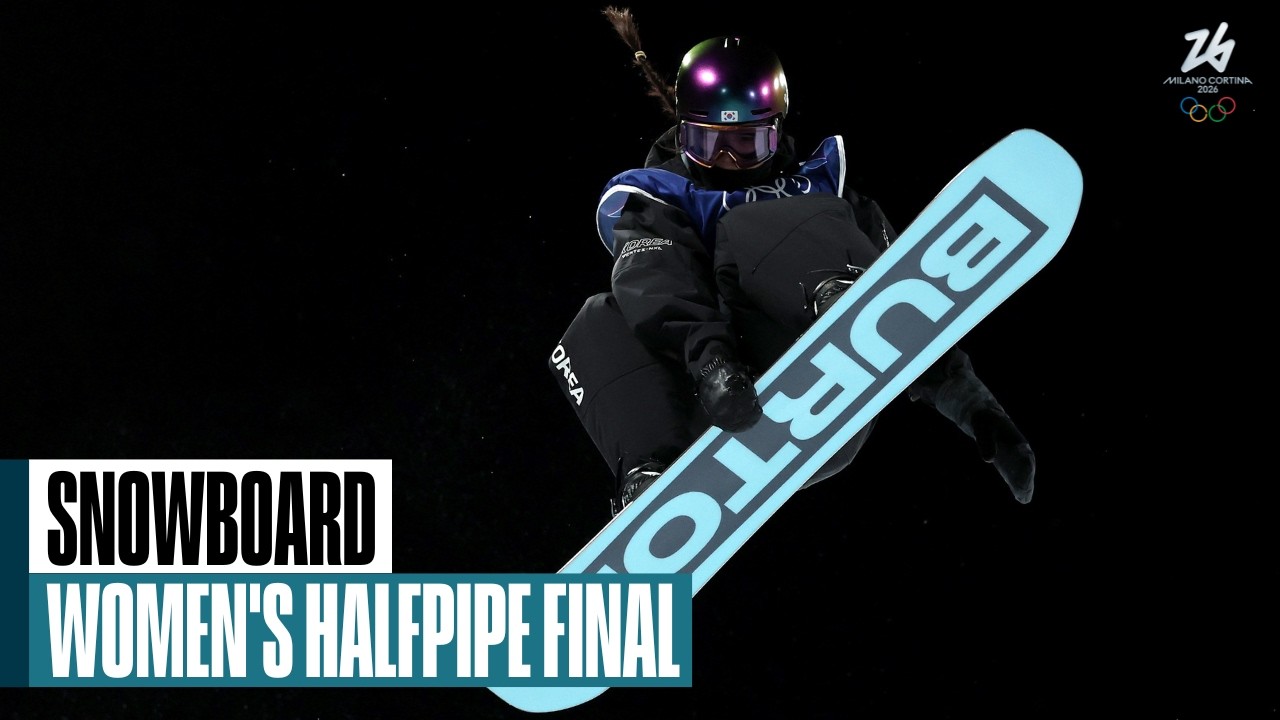
In men’s halfpipe, Yuto Totsuka, who had long competed among the world’s elite but never reached the Olympic pinnacle, finally achieved his long-cherished dream of gold on his third attempt. His second run in the final was nothing short of spectacular, scoring 95.00 points to surpass reigning champion Scotty James of Australia.
Furthermore, 19-year-old Ryusei Yamada won the bronze medal, demonstrating Japan’s depth of talent.
In the women’s event, Mitsuki Ono also claimed bronze. Junior high and high school athletes like 15-year-old Sara Shimizu and Risei Kudo also placed highly, proving that the strength of Japanese snowboarding is being reliably passed on to the next generation.
Big Air: Dominating the Air with the Shock of the “Quintuple-and-a-Half”
In the men’s big air, Japan swept the podium with Akira Kimura taking gold and Ryoma Kimata claiming silver.
Kimura delivered an astonishing “Switch Backside 1900.” This extreme spin, involving five and a half rotations in the air, demonstrated that Japan’s technical prowess exists in a different dimension, leaving other nations in the dust.
In the women’s event, Kokoro Murase became the first Japanese woman to win Big Air gold, etching her name into history.
Opening a Heavy Door: Slopestyle
Slopestyle became the symbol of breaking away from the “halfpipe-only” mindset.
In the women’s event, 19-year-old Mari Fukada won gold, becoming the youngest Japanese female Winter Olympian ever to do so. She captivated the world not only with the difficulty of her tricks but also with the “beauty” of her smooth glide across the snow.
For the men, Takamasa Hasegawa won the silver medal.
This marked Japan’s first-ever Olympic medal in men’s slopestyle, proving Japan’s place among the world’s elite not only in ski jumping but also in the technical skill required to navigate complex terrain.
Get stronger even without snow on the “Giant Air Mattress”
Japan’s greatest strength lies in its ability to mass-produce world-class technology during snow-free periods and in urban settings.
The envy of coaches and media worldwide is Japan’s unique training facility: the air mat facility.
Kings & Quest Revolution
Kings & Quest Revolution
Once upon a time, jump practice could only be done on snowy mountains in winter. As a result, skill improvement was directly proportional to the amount of time spent skiing on those winter slopes.
But in Japan today, over 20 facilities have been built nationwide where skiers can slide down artificial turf slopes and land in giant, fluffy airbags (these facilities are named “Kings” or “Quest”).
This was the magic that led Japan to world domination.
Even multi-rotation spins, which could lead to serious injury on snow, cause no pain on an airbag. Without fear of failure, athletes can repeat drills dozens or even hundreds of times a day.
Moreover, there’s no need to travel to distant snowy mountains. They can practice year-round at nearby facilities on their way home from school or work.
These magical facilities—safe, affordable, and offering overwhelming repetition—enabled athletes in their early teens to master high-difficulty tricks at an unbelievable speed, producing one “new generation monster” after another.
The Many Faces of Kings & Quest
Kings & Quest isn’t just a summer training ground for snowboarding—it’s a place where you can enjoy a variety of activities.
- Practice facilities for various sports
Used as practice areas for freestyle skiing, trampolining, skateboarding, and slacklining (walking on a thin belt). - Sledding fun
Enjoy sledding with the family on beginner lanes or in free spaces. - Barbecue and camping areas
Barbecue areas and campgrounds are often attached, allowing you to grill meat or enjoy drinks after playing.
Free Culture × Science × Data
In addition to our unique training facilities, advancements in teaching methods have also propelled our progress.
We have successfully blended the inherent freedom of snowboarding culture with cutting-edge sports science.
For example, biomechanical analysis at the National Institute of Fitness and Sports in Kanoya. We quantify athletes’ angular velocity (rotational speed) during jumps, providing them with theoretical and practical feedback like, “At this speed, you can manage another half rotation.”
Furthermore, the Japan Ski Association has introduced a “dedicated coach system.”
By having one coach deeply involved with a specific athlete, they can provide care on both the technical and mental fronts. Immediately filming and sharing runs during practice via smartphone, then making corrections on the spot, has become commonplace—a fusion of digital and analog.
Dual expertise with skateboarding and world-class standards born from playgrounds
Furthermore, the maturation of Japanese athletes’ “sideways culture” is particularly noteworthy.
Many athletes have been familiar with skateboarding since childhood, not just snowboarding.
The exquisite sense of balance honed in concrete parks directly translates to smooth maneuvers on snow rails and halfpipes.
Moreover, training facilities are not merely “places for intensive practice” but also “playgrounds with friends.”
Rivals of the same generation gather, sharing videos of new tricks on social media, and enjoy competing with each other, saying things like, “If you do that, I’ll do this.”
This self-driven, positive atmosphere is what creates Japan’s overwhelming depth of talent.
The World Standard Made in Japan—What is the Key to Victory in the 2030 French Alps?

Japan’s remarkable rise has been reported with astonishment as “the wildest outcome.”
In today’s snowboarding world, the question of “just how far Japanese athletes will push the difficulty of their tricks” has become the very benchmark for judging competitions.
However, the world has already begun analyzing Japan’s infrastructure strategy as a “winning formula.” Countries will emerge that invest funds to build massive air-cushion facilities and incorporate scientific analysis.
What are the key points for Japan to continue winning in the 2030 French Alps and the 2034 Salt Lake City, Utah? What are Japan’s unique strengths that world powerhouses cannot easily replicate?
It may be a culture cultivated by the overwhelming density of the community.
At practice facilities in Japanese cities, world-class top riders and local elementary school students “session” together on the same mats.
Within this environment, they showcase tricks to each other, enjoy friendly competition, and autonomously create new moves. Off the mats, they play together on skateboards.
While the hardware can be imitated, transplanting the culture is no easy feat. As long as this unique ecosystem—where hardware and culture are inseparable—continues to evolve, the “Snowboard Empire” won’t crumble easily.
You may also like to read
References
Japan Smashes Medal Record at the Milano Cortina Winter Olympics, https://www.nippon.com/en/japan-data/h02678/
Olympic snowboarding at Milan Cortina 2026: Japan owns park and pipe, Chloe Kim’s three-peat denied, https://www.nbcolympics.com/news/olympic-snowboarding-milan-cortina-2026-biggest-stories-highlights-replays-medal-results-and-top-athletes
Why Did Japan Keep Winning? The Five Factors Behind Japan’s Snowboarding Breakthrough at the Milan Olympics …, https://sports.yahoo.co.jp/column/detail/2026022300002-spnavi
[Milan-Cortina 2026]Snowboard Halfpipe | Results Update, Japanese Team, Medals, Performance List, https://www.olympics.com/ja/milano-cortina-2026/news/snowboard-halfpipe-results-medals
Olympics: Japan’s athletes win a record 24 medals…, https://www.yomiuri.co.jp/olympic/2026/20260222-GYT1T00207/
Snowboarding: Japan’s Ono Mitsuki and Totsuka Yuto soar to halfpipe World Cup victories in Aspen – Milano Cortina 2026, https://www.olympics.com/en/milano-cortina-2026/news/snowboarding-japan-ono-mitsuki-and-totsuka-yuto-halfpipe-world-cup-victories-aspen-
How Team Japan became world-beaters in Olympic snowboarding, https://www.japantimes.co.jp/olympics/2026/02/15/team-japan-snowboarding-dominance/
【Snowboarding × Olympics Complete Guide】2026 Milan-Cortina…, https://dmksnowboard.com/snowboard-olympics-2026/
Japan’s Kimura, Kimata take gold and silver in men’s snowboarding big air – TSN, https://www.tsn.ca/olympics/article/japans-kimura-kimata-take-gold-and-silver-in-mens-snowboarding-big-air/
2026 Winter Olympics: Japan’s Kimura and Kimata dazzle in Big Air snowboarding to claim gold and silver – GMA Network, https://www.gmanetwork.com/news/sports/othersports/975798/2026-winter-olympics-japan-s-kimura-and-kimata-dazzle-in-big-air-snowboarding-to-claim-gold-and-silver/story/
Japan’s Kimura and Kimata take gold and silver in men’s snowboarding big air at Winter Olympics – KTVB, https://www.ktvb.com/article/syndication/associatedpress/japans-kimura-and-kimata-take-gold-and-silver-in-mens-snowboarding-big-air-at-winter-olympics/616-a378bc4a-87b4-44f3-af47-fa3e57d723d7
Japan’s snowboard superstar Murase Kokomo: ‘Passing the torch doesn’t cross my mind – I want to keep making history’, https://www.olympics.com/en/milano-cortina-2026/news/japans-snowboard-superstar-murase-kokomo-keep-making-history
Men’s Snowboard Slopestyle Final [Results] Toshinori Hasegawa Takes “Silver,” First Japanese Medalist in Slopestyle… Ryoma Kimata Finishes 11th, https://www.yomiuri.co.jp/olympic/2026/20260217-GYT1T00479/
[Milan-Cortina 2026]Snowboard Slopestyle|Results Update・Japan Team・Medals・Performance List, https://www.olympics.com/ja/milano-cortina-2026/news/snowboard-slopestyle-results-medals