Riding the yellow M3 subway line in Milan, about 15 minutes southeast from the Duomo.
Once, at Rogoredo Station—one stop before the terminus—a raw, palpable tension hung in the air, starkly at odds with the glamorous image of Milan, the fashion capital.
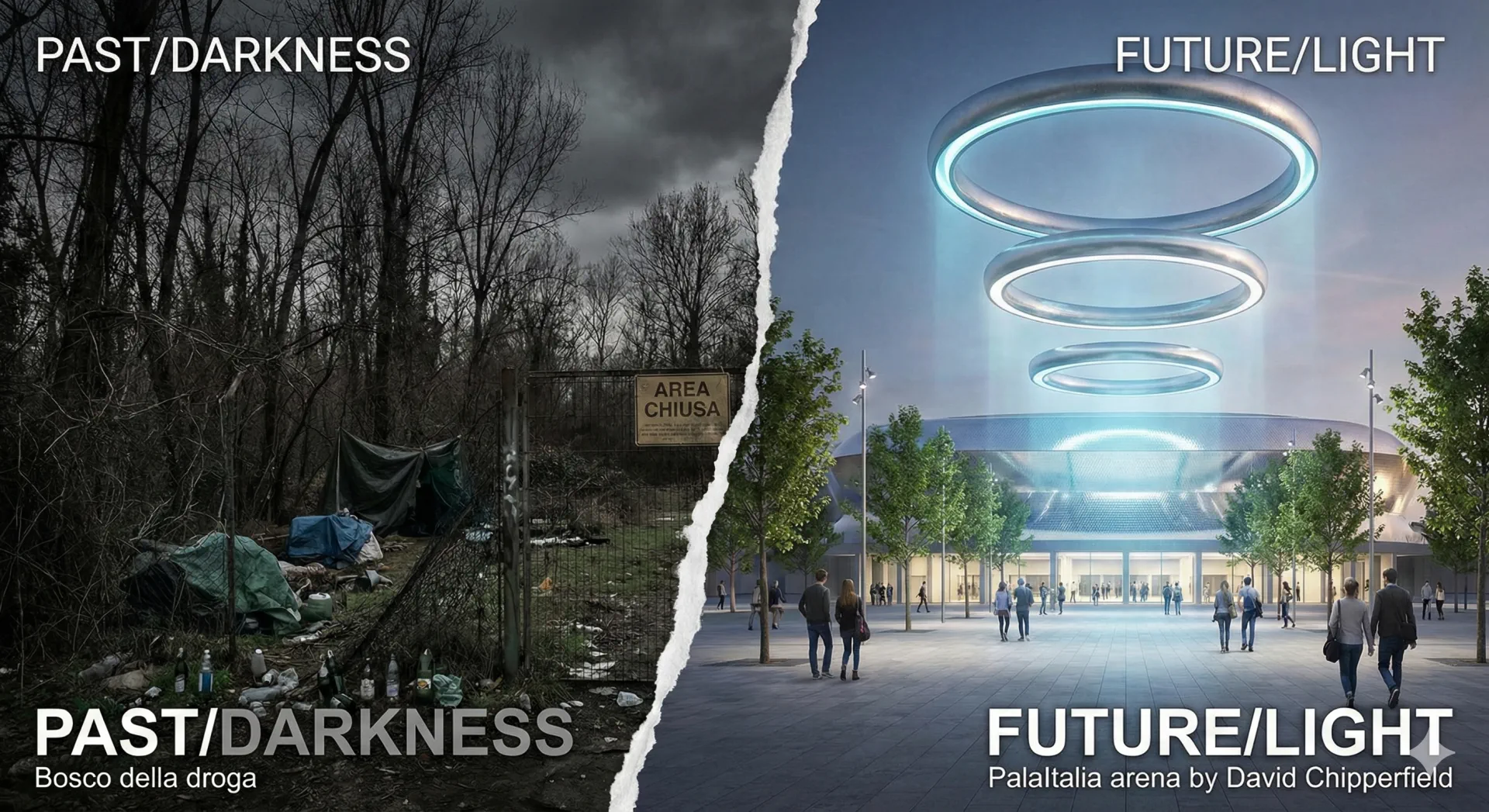
Spanning about 65 hectares right beside the station, the forest was once known as the “Forest of Drugs” (Bosco della droga). Syringes littered the streets, and many drug addicts wandered like ghosts. It gained notoriety both domestically and internationally as one of Italy’s largest open-air drug dealing spots.
This place is now undergoing a dramatic transformation.
This article focuses on the newly built arena “Pala Italia,” one of the main venues for the 2026 Milan-Cortina Olympics and a symbol of urban regeneration in the Santa Giulia district.
The Forest Where the “Army of Waste” Roamed
Until the late 2010s, the woods around Logoledo Station were Milan’s “no-go zone.”
Psychologist Simone Feder called the people who gathered in these woods “the army of the discarded.”
Cut off from social ties, they entered the woods seeking drugs available for just 2 or 3 euros. One man, despite having an infected ankle that was rotting away, reportedly clutched a “black umbrella” tightly in the ambulance and refused to let go. It may have been his last bastion for maintaining his human dignity.
Police attempted to physically seal off the forest by constructing a 4-meter-high concrete wall. However, drug trafficking organizations simply relocated, causing the problem to spread to surrounding areas—a “balloon effect.” The limits of suppression by force were becoming apparent.
“Warriors” armed with cigarettes and garbage bags
The movement to transform this forest begins.
The environmental group Italia Nostra, commissioned by the City of Milan, began cleaning this forest in 2017 alongside the Red Cross. The amount of waste and debris removed from the forest reached 300 tons over 18 months.
Retired citizens and volunteers manually cleared away mountains of trash that had accumulated over decades.
Then, facing the people in the forest was “Team Rogoredo,” led by Simone Feder, who called them the “army of waste.”
Though members didn’t smoke, they always carried cigarettes into the forest. “Want one?” they’d ask. While the person took a puff, they’d treat festering wounds and check their health.
Not excluding them, calling them by name, shaking hands. The persistence of this steady work gradually transformed the forest.
Chipperfield’s “Three Rings”
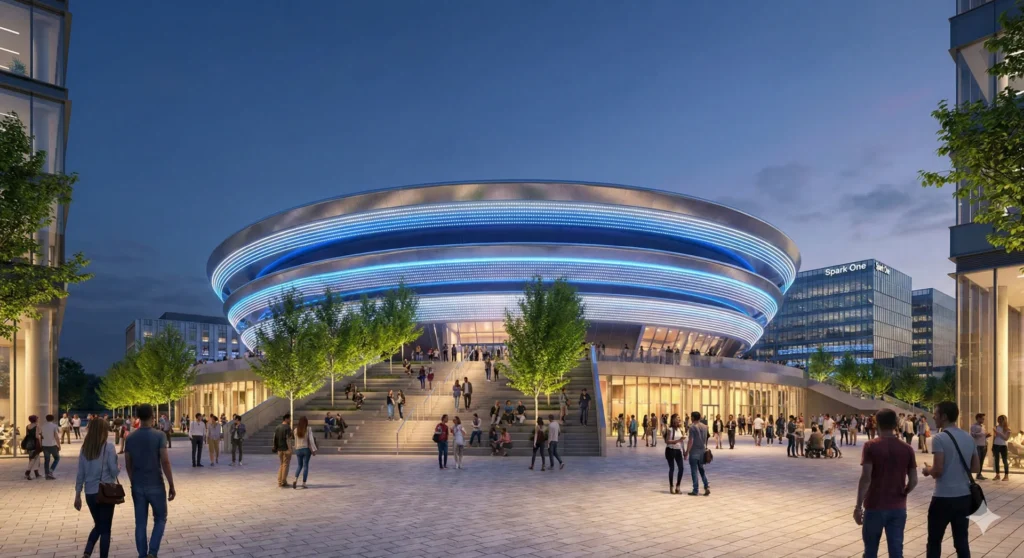
And in 2026, the main Olympic venue, PalaItalia MSG Arena, will appear here.
World-renowned architect David Chipperfield, responsible for the design, proposed the “Three Rings” concept. Inspired by ancient Roman amphitheaters, the elliptical structure features three rings of varying heights that appear to float in the air.
By day, aluminum tubes reflect sunlight, creating a sparkling effect. At night, LEDs behind the structure transform the entire ring into a giant media screen for displaying information.
However, what Chipperfield prioritized most in his design was not the building itself, but the land.
By elevating the arena on a high platform, he created a vast open space. The forest, once inaccessible, transformed into a welcoming place for everyone.
Plantings integrated with the grand staircase evoke the feeling of being on a park hill.
The sense of alienation born from gentrification
The “Forest of Drugs” has vanished. Yet a new challenge has emerged in the Santa Julia district: the problem of gentrification caused by rapid redevelopment.
A business district called “Spark” has sprung up around the arena, lined with office buildings. Rents have skyrocketed. Longtime residents feel alienated, watching their neighborhood become someone else’s.
Infrastructure delays are also severe. Construction of Tram Line 13, intended as the main access route to the Arena, was delayed and ultimately missed the Olympics deadline. To operate the replacement shuttle buses, resident parking spaces were reduced, leading to an overflow of illegal parking in the neighborhood.
For residents, the Olympics have become a nuisance event.
2026: The View from the Ice
The drug-infested forest where armies of waste once roamed has now been literally “overwritten” by a cutting-edge smart city.
Built upon memories of manually removing 300 tons of trash and connecting with people there over a single cigarette, the arena now hosts numerous NHL players battling to crown the world champion in ice hockey.
After a fleeting celebration, Milan’s long challenge begins: will this become a city for new celebrities, or a globally acclaimed model of urban regeneration?
The reborn Para Italia stage is set for the world’s greatest battles. Before witnessing this historic moment, check out the “5 Superstars” you need to know, starting with McDavid.