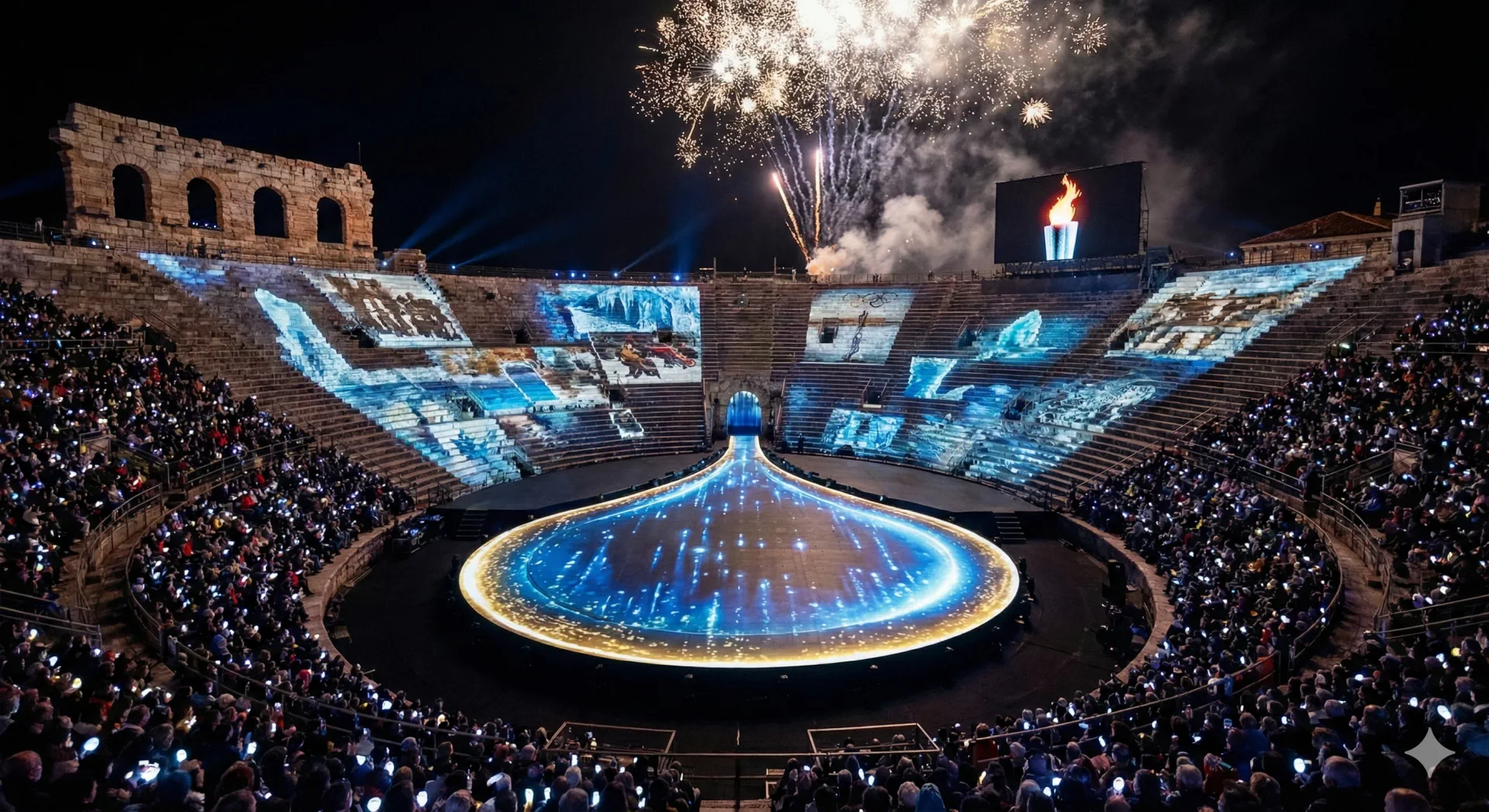
February 22, 2026, will see the closing ceremony of the Milan-Cortina Winter Olympics.
The venue, the Arena di Verona, has a fatal flaw.
It has no roof.
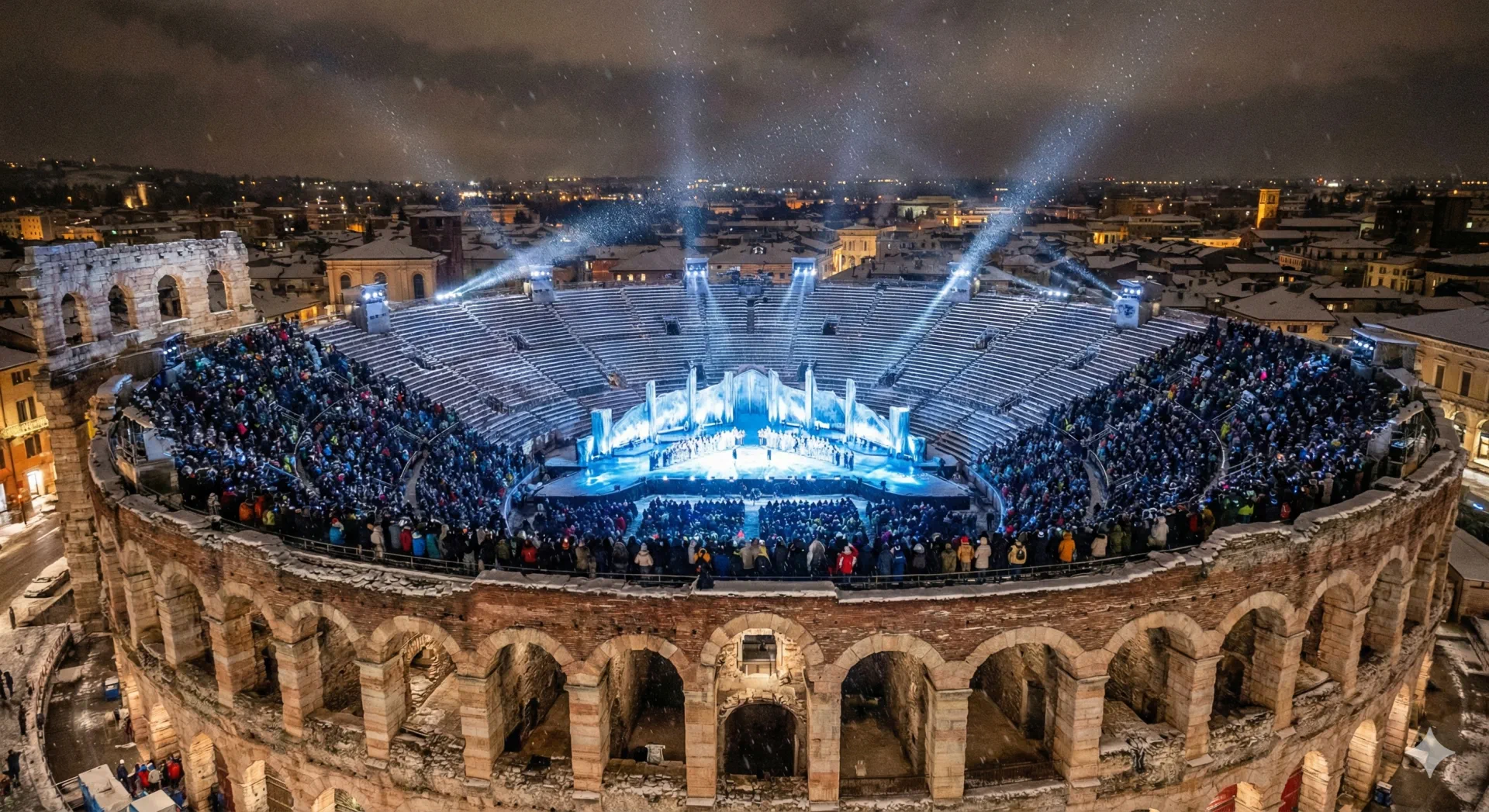
What if it snows or rains on a midwinter night? While retractable roofs are standard for modern stadiums, this is a 2,000-year-old ruin.
Plans to install a roof for the Games were seriously considered. Ultimately, however, the project was scrapped.
Why choose to leave it inconvenient? Behind this decision lay the pride and resolve of a cultural powerhouse.
So, what kind of spectacle will the Closing Ceremony feature? Learn about the ‘history of battlefields’ where gladiators once fought, and the latest performance plans here.
The “13.5 Million Euro Roof” That Never Was
After the Arena di Verona was selected as the venue for the closing ceremony, the city of Verona held an international competition to design a retractable roof.
The winning proposal from a German architectural firm featured an exceptionally elegant design where wires and fabric spread out like a fan.
The budget was approximately 13.5 million euros. Technically feasible, it was a project destined to become a legacy, capable of preventing losses from opera cancellations due to rain.
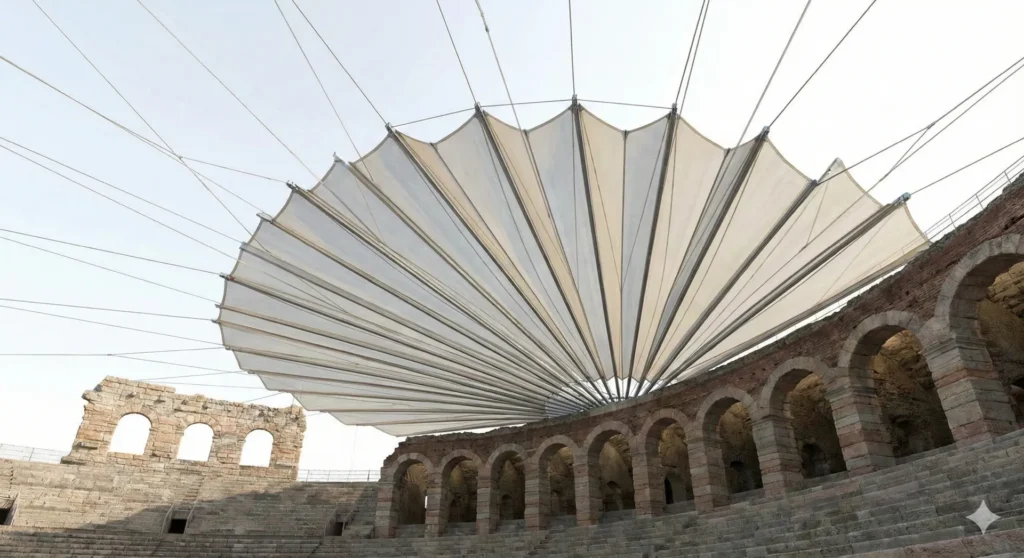
However, the Italian Cultural Heritage Agency rejected this proposal. The reason was:
“The ancient landscape must not be altered.”
They judged that preserving the sense of openness reaching toward the sky and the silhouette of the stone masonry—a view that has endured for 2,000 years—was more important than the success of the Olympics or the comfort of spectators.
Rather than opting for convenient modern architecture, they chose to protect the value of the ancient ruins, even if it meant inconvenience. That was Italy’s conclusion.
The opera way is: “If it rains, just get wet.”
So, what happens locally when it actually rains?
The opera festival held every summer at the arena has a long-standing tradition: a straightforward rule that states, “If it rains, we wait until it stops” or “we cancel.”
Rain during a performance immediately halts the concert, as it damages the instruments. The audience understands this and quietly waits for the performance to resume, wearing raincoats.
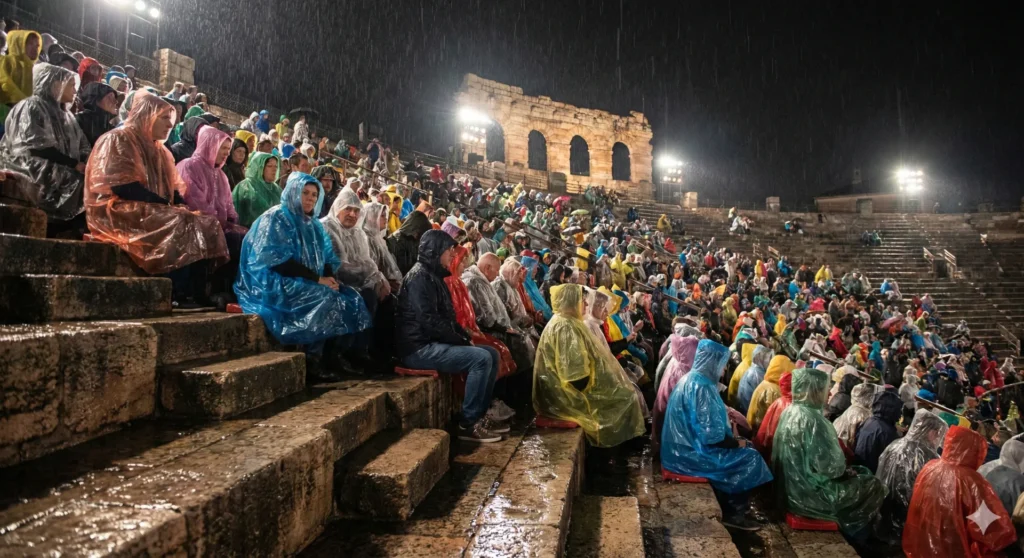
While it may seem unfriendly, a unique aesthetic sensibility can be glimpsed there. When the rain stops, beneath the clear sky, the wet stone benches reflect the moonlight and shine. It is said to be a “shiveringly beautiful moment” that can never be experienced in a roofed theater.
The Olympic closing ceremony will also follow this opera tradition.
Of course, covered seating will be provided for dignitaries, but athletes and most spectators will watch the ceremony under the open sky, just like the ancient Romans did.
Maria Callas’s Beloved “Miracle Acoustics”
There is another meaning to having no roof. It is “sound.”
The Arena di Verona possesses miraculous acoustics, said to carry a singer’s voice to 20,000 spectators without microphones.
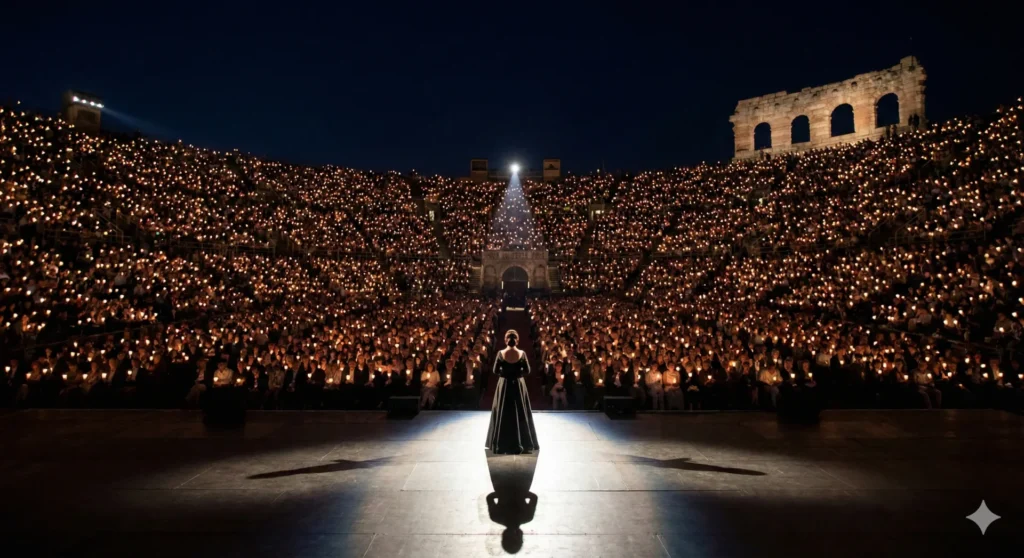
In 1947, just as the legendary diva Maria Callas took flight from here to the world, the unique resonance that the elliptical stone walls preserve and send echoing into the night sky might be lost if a roof is added.
At the closing ceremony, in the silent moment when the Olympic flame is extinguished, the unique “raw resonance” of this venue will be delivered to the entire world.
From “no roof” to “open sky.”
On the day of the closing ceremony, if the weather is clear, you will witness the world’s most beautiful finale, where ancient ruins and cutting-edge technology merge. Even if it rains, it will still create a dramatic scene that will go down in history.
Shift your perspective from “no roof” to “the sky above.”
In our modern pursuit of convenience, Italy deliberately chose inconvenience to show respect for history and nature. Viewing the closing ceremony with this in mind may offer a different perspective.
The Arena di Verona also served as the venue for the Paralympic Opening Ceremony. Not only the roof, but accessibility became a major issue. Find out how it was resolved in this article.