On June 15, 1991, at the 97th IOC Session held in Birmingham, England, Nagano was selected as the host city for the 1998 Winter Olympics.
This is the second time the Winter Olympics have been held in Japan, following Sapporo in 1972.
The Moment the Host City Was Announced
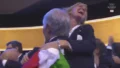
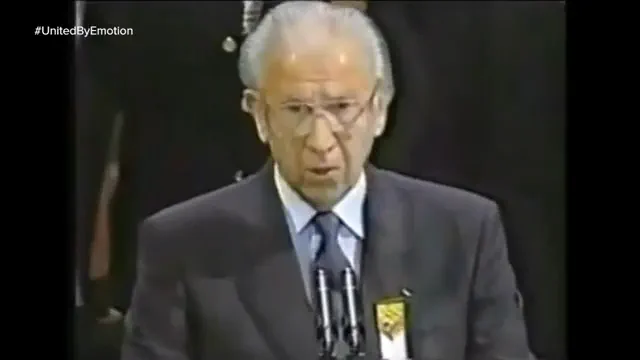
10:55 p.m. Japan time. IOC President Juan Antonio Samaranch opened the envelope and announced the name of the host city.
“Now, I’d like to announce the winner……. The city of NAGANO!!”
Third time’s the charm: Overcoming defeats in Nagoya and Sapporo
Japan’s Olympic bids had suffered bitter defeats: Nagoya for the 1988 Games and Sapporo for the 1992 Games. With no room for error, Japan placed its final hopes on Nagano.
At the time, Salt Lake City, USA, was considered overwhelmingly favored, boasting existing facilities and perfect operational capabilities.
In contrast, Nagano staked its bid on the promise of yet-to-be-built facilities, a vision of coexistence with nature symbolized by its mascot “Snowlets,” and the compelling cause of bringing the Winter Olympics to Asia after consecutive Western hosts.
The fervor of citizens who gathered late into the night under pouring rain at Zenkoji Temple, watching a large screen and praying, ultimately swayed the hearts of the IOC members in Birmingham.
The Bell of Zenkoji Temple and the “One School, One Country Movement”
Nagano’s winning formula lay not so much in economic strength or operational capabilities, but in its “heartfelt activities.” Crucially, the new Olympic movement Nagano presented to the IOC was the One School, One Country initiative.
This initiative involved elementary and junior high schools within the prefecture selecting one participating nation to sponsor. Each school learned about that country’s culture and then enthusiastically cheered for its athletes at the venues as if they were family.
This resonated deeply with IOC members—idealistic in the best sense, or overly formalistic in the worst.
The One School, One Country initiative became an official IOC program starting with the next Games in Sydney. It remains a lasting legacy of the Nagano Games to this day.
“Operation Kimono”
Nagano sent a large delegation to Birmingham, the site of the decisive vote. There, they launched the “Operation Kimono”, a campaign still talked about today.
They rented rooms in the hotel where IOC members were staying and chartered private venues. There, women dressed in kimono served sushi flown in from London’s high-end department stores and the finest Japanese sake.
At the time, IOC regulations on bid campaigns were still relatively lax, and it was common for candidate cities to host elaborate parties. However, the “Operation Kimono” was not merely about “offering a Japanese experience.” It was a meticulously calculated “Omotenashi”, hospitality effort, based on thorough research into the personal preferences of each individual IOC member.
This is said to have been instrumental in securing the final swing votes.
The Decision to Host and What Followed… Salt Lake City’s Runaway Train
Simultaneous interpretation during the live TV broadcast of the decision moment. “Nagano ga…” The voice faltered for an instant. The announcer then continued, “The Winter Olympics seven years from now will be held in Nagano!” in an excited voice.
This moment remains etched in many people’s memories even now, repeatedly replayed on YouTube.
At the IOC Session venue in Birmingham, the Nagano bid delegation rose to their feet. At Zenkoji Temple, where citizens watched the large screen, the sound of the joyous bell rang out.
Meanwhile, the Salt Lake City bid delegation stood stunned, defeated by a margin of just four votes.
The question “Why, when we were clearly better than Nagano?” became the ‘lesson’ that “To win, you must do more than Nagano did.” This evolved into the intense 2002 bid battle, which later escalated to the expulsion of an IOC member.
Voting Results
The vote contested across five cities became a historic nail-biter, with no city securing a majority until the very end, forcing a fifth round. Nagano maintained the lead throughout, but its final victory was a razor-thin margin of just four votes.
| City Name | 1st | 1st(elimination) | 2nd | 3nd | Final |
| Nagano (Japan) | 21 | – | 30 | 36 | 46 |
| Salt lake city(US) | 15 | 59 | 27 | 29 | 42 |
| Östersund (Sweden) | 18 | – | 25 | 23 | – |
| Jaca(Spain) | 19 | – | 5 | – | – |
| Aosta(Italy) | 15 | 29 | – | – | – |
References
- Japanese Olympic Committee (JOC): NAGANO 1998 Winter Olympic Games
- InsideTheGames: Philip Barker: Last Olympics of 20th century ended an old era
- International Olympic Committee: Nagano 1998 – The Legacy of ‘One School, One Country‘
- Shinano Mainichi Newspaper: 25 Years Since the Olympics: What the One School, One Country Movement Left Behind
- nippon.com: Japan Caught in the Illusion of the Olympics and World Expo
- The Guardian: Investigation launched into spiralling allegations about Nagano bid | 2002 Winter Olympic bid scandal